
Endoscopic Spine Surgery
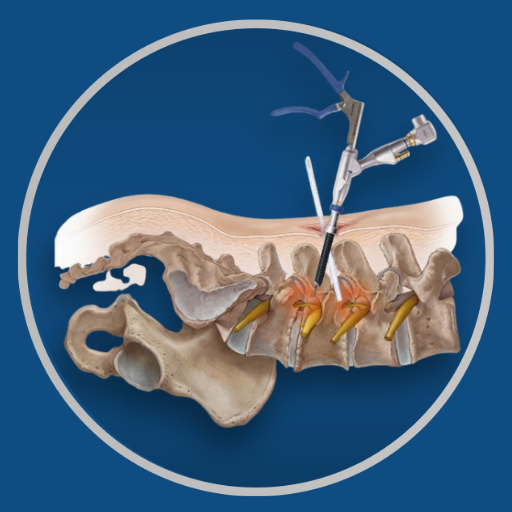
A highly minimally invasive approach to spinal decompression using an endoscope — a small camera and working channel — to remove disc material or bone that is compressing a nerve, through an incision under 1 cm.
Overview
Endoscopic spine surgery represents the most minimally invasive end of the spinal surgical spectrum. Using a thin endoscope passed through a small skin incision, the surgeon can visualise and work directly at the point of nerve compression — removing disc material, bone spurs, or ligament tissue — with minimal disruption to surrounding structures. It is appropriate for selected disc herniations and foraminal stenosis where the pathology is discrete and accessible through this approach.
Before Surgery
Pre-operative MRI must clearly delineate the target pathology. The approach is most suitable for single-level, contained disc herniations or foraminal stenosis. Patients with multi-level disease, significant instability, or prior surgery at the affected level may not be appropriate candidates. Medical clearance and standard pre-operative blood tests are required.
During Surgery
The procedure is performed under general or local anaesthesia with sedation. A small incision of less than 1 cm is made and a series of dilators are passed to the target level under fluoroscopic guidance. The endoscope is introduced, and the entire procedure is performed through its working channel using specialised instruments under continuous direct vision. Duration is typically 45–90 minutes.
After Surgery
Patients are typically mobile within hours. Same-day discharge or overnight stay depending on the clinical picture. Minimal post-operative pain compared to open procedures. Wound care is straightforward — a small dressing for a few days.
Recovery
Return to desk work within 1–2 weeks in many cases. Return to physical activity within 4–6 weeks. Physiotherapy focused on core strengthening begins early. The recovery profile of endoscopic surgery is the fastest among spinal surgical procedures.
Dr. Viswanath's Approach
Endoscopic technique is used in appropriate cases — where the pathology is discrete, the indication is clear, and the anatomy is suitable. It is not applied indiscriminately as a novelty — the choice between endoscopic, minimally invasive open, and standard open approaches is based on what gives the most reliable result for the specific clinical situation.
Medical Disclaimer: This information is provided for educational purposes only and does not constitute medical advice.